
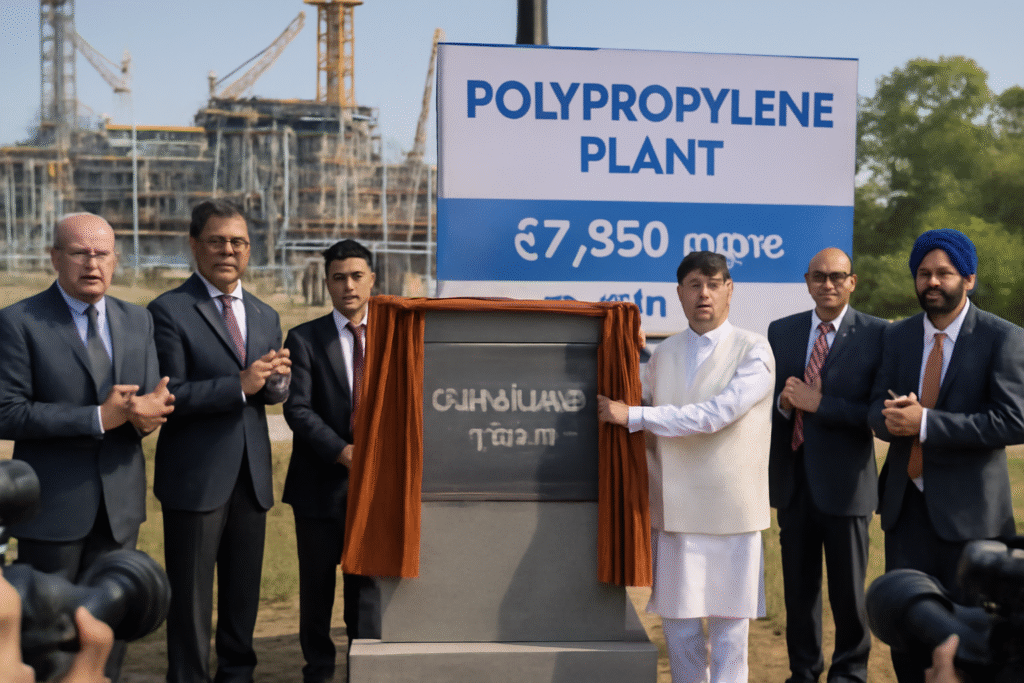
India’s petrochemical industry is on the cusp of a transformative leap. The foundation stone for a ₹7,230 crore Polypropylene Plant was recently laid in Numaligarh, Assam—a milestone project expected to enhance the country’s manufacturing capabilities and fortify its place in the global petrochemical arena. This development holds tremendous promise not only for Assam’s economy but for the industrial landscape of India at large.
This article delves into the significance of this colossal investment, its impact on the regional and national economy, the technical and environmental facets of the project, and what it means for India’s ambition to become a petrochemical powerhouse. We also share insights relevant to investors, policymakers, and industry players, using focused SEO keywords to maximize reach and relevance.
What Is Polypropylene and Why Does It Matter?
Polypropylene (PP) is a versatile plastic polymer used widely across industries such as packaging, automotive, textiles, and consumer goods. Its robust chemical resistance, flexibility, and affordability make it a critical raw material for countless products.
Increasing demand for polypropylene in India—in line with rapid urbanization, growing retail and packaging sectors, and automotive industry growth—creates a fertile ground for expanding local production capacities.
Numaligarh’s Polypropylene Plant: Project Scope and Scale
The Numaligarh project is a massive undertaking valued at ₹7,230 crore, featuring advanced petrochemical technology to produce high-quality polypropylene. When operational, it will contribute significantly toward:
-
Reducing India’s dependence on polypropylene imports.
-
Providing downstream industries with accessible, competitively priced raw materials.
-
Boosting job creation and ancillary industries in Northeast India.
-
Enhancing exports and India’s footprint in the global petrochemical market.
Strategic Importance for Assam and Northeast India
This project complements the existing Numaligarh Refinery’s capabilities, consolidating Assam as a rising hub for petrochemical expertise. The plant is expected to:
-
Generate substantial employment opportunities.
-
Encourage infrastructure development around Numaligarh.
-
Contribute to the government’s ‘Make in India’ initiative promoting domestic manufacturing.
-
Foster regional economic integration with the rest of the country and neighboring countries.
Project Technology and Environmental Outlook
The plant will employ state-of-the-art, energy-efficient technologies aimed at minimizing environmental footprints. Commitment to sustainable practices includes:
-
Waste reduction and recycling systems.
-
Low emissions operations.
-
Water conservation technologies.
-
Continuous environmental risk monitoring in compliance with Indian and international standards.
These practices align with India’s growing emphasis on sustainable industrial progress.
Market Outlook and Industry Impact
The polypropylene market in India is forecasted to grow significantly in the coming decade due to:
-
Expanding packaging and consumer product sectors.
-
Increasing automotive plastic usage amid sectoral shifts.
-
Rising construction activities demanding plastic components.
Local polypropylene production at Numaligarh will provide a more stable supply chain for these industries, lowering costs and enhancing domestic competitiveness.
For Business and Investors: Opportunities and Challenges
Opportunities
-
Direct investment and joint venture prospects.
-
Ancillary manufacturing and logistics.
-
Export-led growth potential leveraging India’s strategic trade agreements.
Challenges
-
Managing raw material costs and supply volatility.
-
Navigating complex regulatory requirements.
-
Ensuring timely project completion amid market fluctuations.
Expert Insight: Growing India’s Petrochemical Self-Reliance
Numaligarh’s polypropylene plant symbolizes a strategic move toward reducing import reliance and tapping into burgeoning global demand. With ongoing international trade tensions and supply chain uncertainties, India’s self-reliance in petrochemicals has never been more crucial.
Actionable Takeaways
-
Investors should monitor progress closely to identify collaboration or funding avenues.
-
Policymakers can leverage lessons from this project to replicate success models in other regions.
-
Industry players can expect more domestic raw material availability and plan production expansions accordingly.