
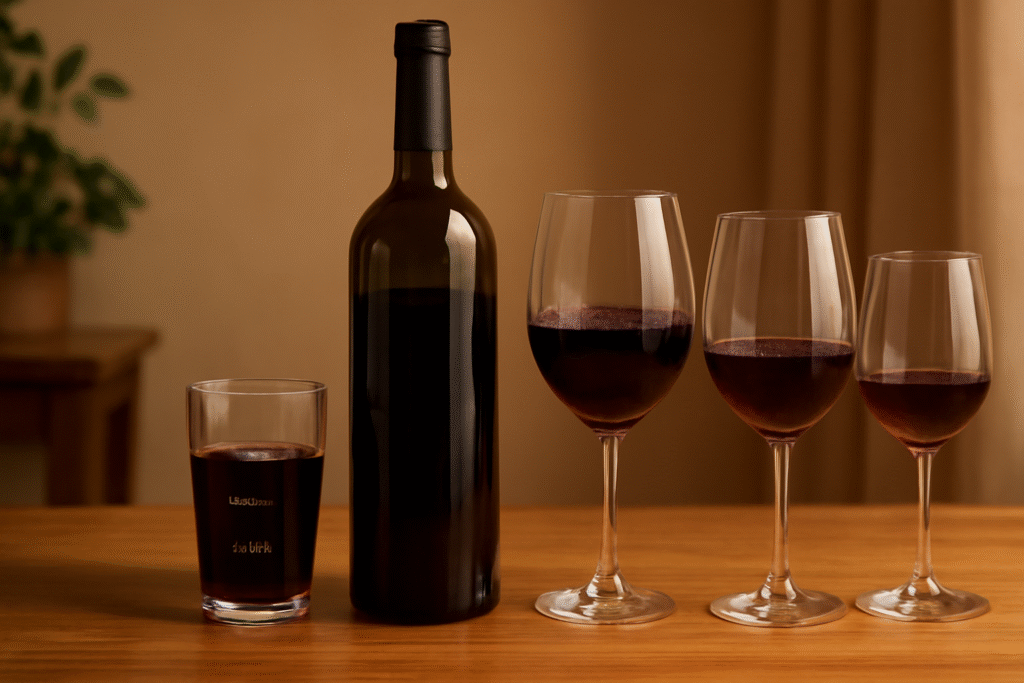
For wine enthusiasts and casual drinkers alike, one question comes up often: how many glasses of wine are in a bottle? It’s a straightforward query, but with room for nuance depending on serving size, bottle type, and even the style of wine being poured. Whether you’re planning a dinner party, stocking your wine cellar, or just curious about your favorite vintage, understanding the answer is surprisingly practical.
This article breaks down standard measurements, variations by glass size, how big bottles factor in, tips for serving, and even some creative ideas to impress guests and optimize your wine experience. Plus, it’s packed with SEO-friendly keywords so it can help those searching for precise wine knowledge.
The Standard Wine Bottle: 750 Milliliters
The most common wine bottle size worldwide is 750 milliliters (ml), equivalent to about 25.4 fluid ounces. This size became standard due to a mix of traditions, pricing, and packaging logistics. So when we ask how many glasses of wine are in a bottle, we’re generally referring to a 750 ml bottle.
What Counts as a Glass of Wine?
The number of glasses in a bottle depends on how much wine you pour per glass. Typical serving sizes include:
-
Standard Serving (5 ounces): About 5 oz per glass is typical in many restaurants and considered a standard pour. This means roughly 5 glasses per 750 ml bottle.
-
Generous Pour (6 oz): More common in home settings or casual parties, yielding about 4 glasses per bottle.
-
Small Tasting Pour (3 oz): Used in tastings or samplings, increasing the count to around 8 glasses per bottle.
Larger Bottle Sizes and Their Glass Equivalents
Wine bottles come in various sizes beyond the standard, which impacts how many glasses you get:
| Bottle Size | Volume (ml) | Approx. Glasses (5 oz pour) |
|---|---|---|
| Standard Bottle | 750 | 5 |
| Magnum | 1,500 | 10 |
| Jeroboam | 3,000 | 20 |
| Methuselah | 6,000 | 40 |
These larger bottles are often seen at celebrations or special events and can serve big crowds efficiently.
Wine Glass Shapes and Their Impact
Glass shape matters! Larger bowls or wider rims can hold more wine, tempting pours beyond the standard 5 oz. Sipping from a larger glass with less wine can enhance aromas, affecting the tasting experience while altering the perceived serving size.
Business Perspective: Serving Costs and Profit Margins
For restaurants and bars, knowing how many glasses come out of a bottle is crucial for stock management and pricing. Serving size directly impacts profit margins. Over-pouring reduces profit, while under-pouring can frustrate customers.
Tips for businesses:
-
Use measuring tools or wine pourers for consistency.
-
Educate servers about standard glass sizes.
-
Calculate profit margins on a per-glass basis.
Creative Serving Ideas for Wine Lovers
-
Vertical Tastings: Serve smaller pours from multiple bottles to explore a variety of wines.
-
Food Pairing Events: Match 5 oz pours with perfect snack pairings.
-
Sangria or Cocktails: Use leftover wine bottles creatively in mixed drinks.
Q: How many glasses of wine in a magnum bottle?
A: About 10 glasses of wine with a standard 5 oz pour. A magnum bottle holds 1.5 liters (50.7 ounces), which is twice a standard 750 ml bottle and yields roughly double the servings.
Q: Can filling glasses more than 5 oz change the number of servings?
A: Yes. Larger pours reduce the total number of servings available in a bottle. For example, pouring 6 or 8 oz glasses will result in fewer glasses per bottle.
Q: Is the 5 oz pour a legal standard?
A: No, it is not legally mandated but widely accepted as the industry standard in hospitality for optimal taste and responsible consumption.