
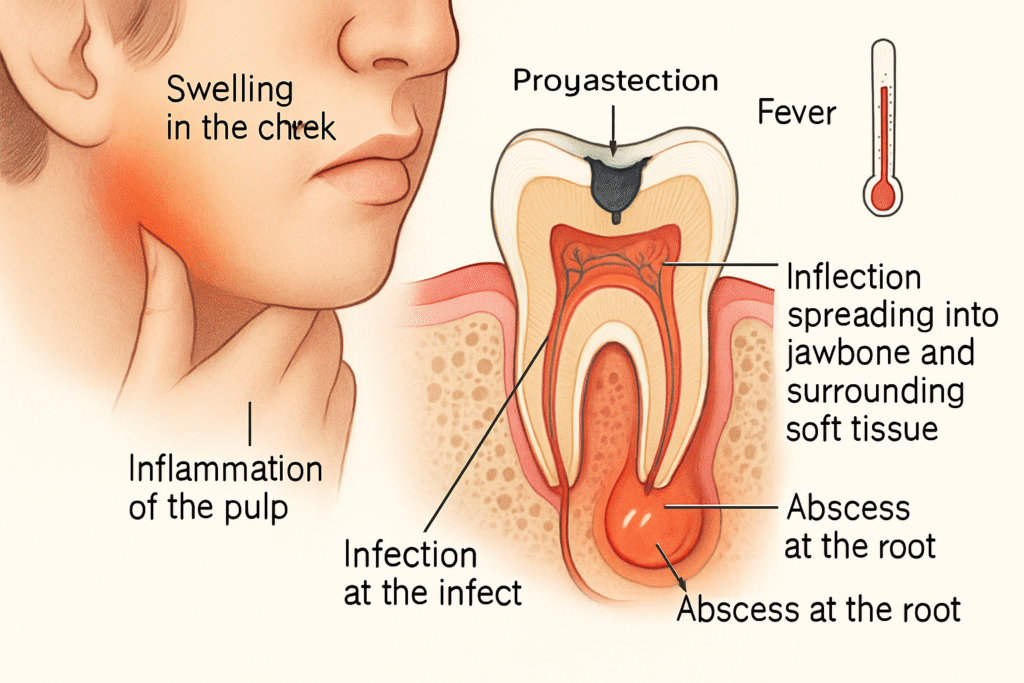
A toothache is something most people have experienced, and while inconvenient and painful, it often seems like a minor, localized issue. But what if that toothache isn’t just a simple problem? How long until a tooth infection kills you? This question might sound extreme, but untreated tooth infections can turn deadly. Today, science and dental care have made fatalities from tooth infections rare, but it’s crucial to understand just how dangerous dental infections can become if ignored.
What Is a Tooth Infection?
A tooth infection, or dental abscess, occurs when bacteria infiltrate the pulp—the soft tissue inside the tooth—and cause a buildup of pus. This infection can stem from decay, trauma, or broken teeth. Early symptoms include constant, throbbing tooth pain, swelling, and sensitivity.
If untreated, the infection can extend beyond the tooth to the jaw, neck, or even brain. The danger lies in how quickly it can spread and overwhelm the immune system, leading to severe complications or, rarely, death.
How Quickly Can a Tooth Infection Become Fatal?
The progression timeline varies but usually follows this pattern:
-
1 to 3 days: Initial pain and swelling as infection develops.
-
4 to 7 days: Abscess forms; infection may spread to surrounding tissue.
-
Weeks to months: Infection can invade bloodstream causing sepsis or spread to brain causing an abscess.
Death is rare but can happen within days to weeks once infection reaches vital organs or causes systemic failure.
Potentially Fatal Complications from Tooth Infection
-
Sepsis: A severe, body-wide reaction to infection causing organ damage. Signs include fever, confusion, rapid breathing, and low blood pressure.
-
Ludwig’s Angina: Infection spreads to the floor of the mouth causing swelling that can block the airway.
-
Brain Abscess: Infection reaches the brain forming dangerous pus pockets.
-
Endocarditis: Infection inflames the heart lining.
-
Osteomyelitis: Bone infection that can spread indefinitely.
Historical Context: Tooth Infection Fatalities
Before modern antibiotics and dental care, dental infections were killers in the 1600s and early 1900s, responsible for 10 to 40 percent of deaths in some areas. Today, deaths are exceedingly rare due to timely treatment, but complacency remains risky.
When to Seek Emergency Care
-
Severe pain that radiates to ear or jaw.
-
Trouble swallowing or breathing.
-
Swelling that worsens over days.
-
Fever above 101°F (38.3°C).
-
Blood in saliva or pus drainage.
Delayed care can lead to rapid deterioration and life-threatening situations.
How to Prevent a Tooth Infection From Becoming Dangerous
-
Regular dental check-ups.
-
Treat cavities and broken teeth promptly.
-
Practice daily oral hygiene with brushing and flossing.
-
Use antibiotics only as prescribed.
-
Seek prompt care for persistent tooth pain or swelling.
Actionable Advice: What to Do if You Suspect an Infection
-
Don’t ignore tooth pain—early treatment is key.
-
Visit an emergency dentist or urgent care center.
-
Follow prescribed treatment exactly, including antibiotics.
-
Monitor symptoms and return for follow-up if needed.
Creative Reflection: Tooth Infection As a Silent Threat
Think of a tooth infection as a ticking time bomb hidden beneath your smile. Each day untreated allows bacteria to multiply and infiltrate deeper tissues, potentially triggering a cascade of deadly events. With modern medicine as a defuser, timely intervention can stop the clock and save lives.
Read more on aitoolcent