
A flat tire is every driver’s headache, but your spare tire is there to save the day—temporarily. If you’re wondering, how long can you drive on a spare tire? and what precautions should you take? you’re not alone. Spare tires—especially the compact “donut” types—are designed as short-term solutions to keep you moving until you get proper repairs. Driving on a spare tire requires caution, and knowing its limits can keep you safe and protect your vehicle.
This article discusses how far and how fast you can safely drive on a spare tire, the different types of spare tires, and actionable tips to get you back to full speed quickly. We also cover SEO-targeted keywords for anyone searching for practical, reliable tools on this topic.
Types of Spare Tires: What’s Under Your Trunk?
1. Compact Spare Tire (Donut)
-
Smaller and lighter than regular tires.
-
Designed for emergency, short-distance use.
-
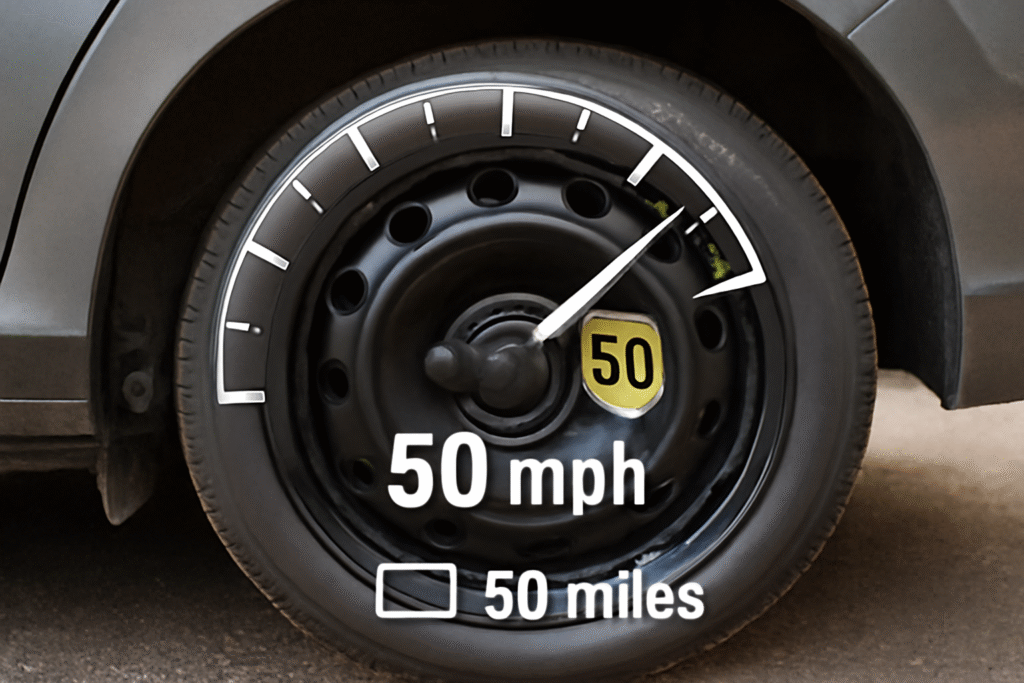
Typically limited to 50 miles maximum and speeds of 50 mph or less.
2. Full-Size Spare Tire
-
Matches regular tires in dimensions and functionality.
-
Can typically be driven longer distances—up to several hundred miles—if properly maintained.
-
Provides better performance and safety than compact spares.
How Far Can You Drive on a Spare Tire?
-
Compact spares: Most manufacturers recommend no more than 50 miles at a maximum speed of 50 mph. Some sources advise not to exceed 70 miles, but it’s generally unsafe to strain a donut tire beyond this.
-
Full-size spares: If in good condition and matched to your tires, these can be driven like regular tires, although they still need replacement for long-term use.
Why the Limitations?
Spare tires have limitations in:
-
Traction and handling: Donut spares have less grip than normal tires, increasing braking distances.
-
Durability: Made with thinner rubber and less tread.
-
Wear and tear: Driving on a spare long-term causes uneven wear and can damage your car’s suspension or transmission.
How Fast Should You Drive on a Spare Tire?
-
Keep your speed below 50 mph on compact spare tires. This prevents heat buildup and tread separation.
-
Drive cautiously, especially under wet or slippery conditions.
-
Avoid sudden turns and hard braking, as spare tires alter your handling dynamics.
Safety Tips Driving with a Spare Tire
-
Check the pressure: Spare tires often require higher PSI, usually around 60 PSI—check your owner’s manual.
-
Use hazard lights: If forced to drive slowly on highways, alert other drivers.
-
Avoid long trips: Head directly to a tire shop or mechanic.
-
Maintain proper spacing: Extra braking distance helps mitigate handling changes.
Business Insight: Why Knowing Spare Tire Limits Matters
For businesses in auto repair, insurance, or fleet management, educating customers and drivers about spare tire limitations reduces accidents and liabilities. Proactively promoting tire maintenance and emergency readiness adds value and trust.
Myth-Busting
-
Myth: Spare tires are just like normal tires.
Reality: Most spares are temporary fixes, requiring quick replacement. -
Myth: You can drive anywhere with a spare.
Reality: Spares are designed for emergency use only, with strict distance and speed limits.